You just brought home an electric car and want a Level 2 charger in the garage. Then you open the panel door and see “100” printed on the main breaker. Now you are wondering if the house can handle it.
So, can my electrical panel handle an EV charger? Often, yes, but it depends on four things: your service rating, how much power the home already uses, how much current the charger needs and where it will be installed. Some homes add Level 2 charging with no service upgrade. Others need a lower charging setting, load management or electrical upgrades.
The service rating alone does not settle it. A professional load calculation does. Here is how homeowners in White Bear Lake and elsewhere can understand the answer.
How Do You Know If Your Electrical Panel Can Support an EV Charger?
An electrician looks at the whole system, not just one number on the main breaker.
| Factor | What It Means | Why It Matters for EV Charging |
|---|---|---|
| Service rating | The total current your utility service can deliver, such as 100, 150 or 200 amps | Sets the upper limit for everything in the house |
| Calculated household load | The demand your home places on the service, figured by a code method | Shows how much capacity is really left |
| Charging current | How many amps the charger draws while charging | Decides the circuit size and the load added |
| Panel condition | Age, wear, damage and the make of the panel | A worn or unsuitable panel may need work first |
| Panel configuration | Breaker spaces and what breakers the panel is listed for | Affects whether a new circuit can be added |
| Installation conditions | Distance to the garage, routing and mounting location | Affects wire size and the installation plan |
| Load management | Equipment that limits charging when the home is busy | May let a charger fit where it otherwise would not |
| Code requirements | The NEC edition and local rules in force | Sets the rules for circuit sizing and protection |
An empty breaker space is not the same as spare capacity. A panel can have open slots and still have no room left on the service. It can also be full of breakers and still have capacity to spare.
How Much Electrical Power Does a Home EV Charger Need?
Home charging comes in two levels. The EV charger itself is called EVSE, short for electric vehicle supply equipment.
Level 1 EV Charging
Level 1 uses a 120 volt outlet and the cord that often comes with the car. According to the U.S. Department of Energy, Level 1 adds about 5 miles of range per hour of charging. That can be enough for short daily drives, but it is slow.
Level 1 still places a long, steady load on the outlet. An older outlet, a shared circuit or a worn connection can overheat under hours of charging. Having an outlet nearby does not mean that outlet is suitable.
Level 2 EV Charging
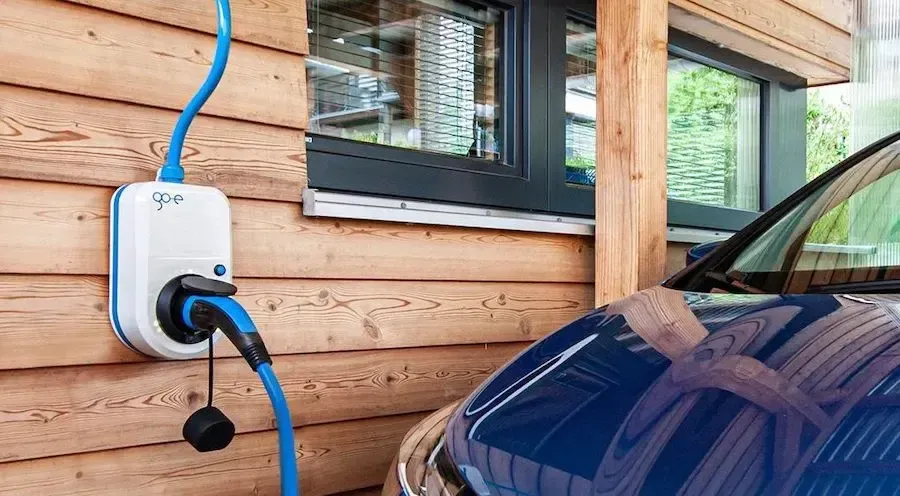
Level 2 runs on 240 volts and is the usual choice for home charging. The Department of Energy notes that most residential Level 2 units run at up to 30 amps and add about 25 miles of range per hour.
Many Level 2 chargers let the installer set the charging current. How fast the car actually charges depends on that setting and on the car’s onboard charger, which has its own limit.
EV charging counts as a continuous load, because it can run at full power for hours. Under the usual sizing approach, the circuit breaker is rated at 125 percent of the charging current. That gives these common pairings:
| Charging Current | Typical Breaker Size | Approximate Power at 240 Volts |
|---|---|---|
| 16 amps | 20 amps | 3.8 kW |
| 24 amps | 30 amps | 5.8 kW |
| 32 amps | 40 amps | 7.7 kW |
| 40 amps | 50 amps | 9.6 kW |
| 48 amps | 60 amps | 11.5 kW |
These are illustrative examples, not an installation plan. The right setup depends on the charger’s ratings, the maker’s instructions, the wire, the code and the home’s capacity. Note that the charging current and the breaker rating are two different numbers.
Can a 100-Amp Electrical Panel Handle an EV Charger?
Sometimes. A 100 amp service does not rule out Level 2 charging on its own.
The answer depends on what else the home runs. Homes with electric heat, central air, an electric water heater, an electric range and an electric dryer may have little capacity left. A home that heats with gas and cooks with gas may have more room.
In some 100 amp homes, a lower-current charger works well, such as 16 or 24 amps. Others need load management or more capacity. Adding a breaker does not add capacity to the service. That is why a load calculation comes first.
Can a 150-Amp Panel Support EV Charging?
A 150 amp service usually leaves more room than 100 amps, but it is not automatically enough. A larger home with heavy electric loads can use much of it. A load calculation is still needed.
Can a 200-Amp Electrical Panel Handle a Level 2 Charger?
A 200 amp service gives the most room of the three, and many of these homes can add a Level 2 charger. It is still not a guarantee. A home with electric heat, a hot tub, a heat pump and a second EV may already use much of that capacity.
How Do Electricians Calculate Available Capacity for EV Charging?
A load calculation estimates the real demand your home puts on its service. Electricians follow a method set out in the National Electrical Code.
They do not simply add up the amp rating of every appliance. The furnace, dryer, oven, water heater and air conditioner almost never all run at full power at once. The code method applies demand factors that reflect how homes actually use power, then adds the new EV load at its full rating.
The difference between the service rating and the calculated demand is the capacity left for new loads.
Here is a simple, illustrative example. It is not a design calculation. Say a home has a 100 amp service and its calculated demand comes to about 75 amps. That leaves roughly 25 amps. A 48 amp charger on a 60 amp circuit would not fit, but a 16 amp charger on a 20 amp circuit might, or a load management system might allow more.
Only a licensed electrician should make that call, using the applicable NEC edition, the equipment instructions and local requirements.
Do You Need to Upgrade Your Electrical Panel for an EV Charger?
Not always. Many homes can add a charger with just a new circuit. An upgrade may make sense when:
- The service does not have enough capacity left
- The panel is old, damaged or not suitable for new breakers
- There is no workable way to add the circuit
- You plan other big loads, like a heat pump or a second EV
- You want a higher charging current than the home can support
It helps to know the difference between four kinds of work:
- A new EV branch circuit runs from your existing panel to the charger. This is the simplest option.
- A subpanel adds breaker spaces, often in the garage. It does not add capacity to the service.
- A panel replacement swaps the old panel for a new one, often with more spaces. The service rating may stay the same.
- A service upgrade increases the total amps coming into the home, such as from 100 to 200 amps. It involves the utility, and usually a new panel too.
If your home does need more room, an electrical panel upgrade is one path. It is not the only one.
Can You Install an EV Charger Without Upgrading the Panel?
Often, yes. Options include:
- A lower charging current that fits the capacity you have
- Adjustable settings on the charger, set by the installer to match the circuit
- An energy management system that limits charging when other loads run, where code allows it
- Load sharing between two chargers on one circuit, for some brands
- Level 1 charging for drivers who do not need much range each day
Which option works depends on your home and the code. A professional evaluation of your existing demand is the starting point.
What Is EV Charger Load Management?
Load management, sometimes called energy management, watches how much power your home is using. When demand gets high, it slows or pauses charging. When demand drops, charging speeds back up.
Dynamic load management does this in real time. For example, if the dryer and the oven are both running, the system may turn charging down until one of them finishes.
A bigger service raises the limit. Load management keeps your home under the limit you already have.
The equipment must be listed for the purpose and set up to match the code and the maker’s instructions. It is not a way around capacity rules, and it is not right for every home.
What If Your Electrical Panel Has No Room for Another Breaker?
A full panel is a space problem, not always a capacity problem.
Some panels are listed for tandem breakers, which fit two circuits in one space. Many are not, and using them in the wrong panel is a code violation and a safety risk. An electrician will check the panel’s label before choosing a breaker.
If the panel has no usable space, a subpanel may add room. A subpanel does not create more service capacity, though. The load calculation still applies. Please do not move breakers or change panel wiring yourself.
Can Older Homes Handle an EV Charger?
Many can. Older homes may still have 60 or 100 amp service, older panels, past wiring changes or grounding that does not meet today’s standards. None of that means the home is unsafe, but it does mean the system deserves a closer look before you choose a charger.
White Bear Lake homeowners with older houses can benefit from a panel assessment before buying a Level 2 charger, so the charger fits the home.
What Affects the Cost of Installing an EV Charger?
Every installation is different. The biggest factors are the distance from the panel to the charger, the circuit and wire size, and whether the charger goes in an attached garage, a detached garage or outdoors. How the wire is routed, the panel’s condition, load management equipment, permit fees, any service upgrade and the charger itself all play a part too. A site visit is the only way to get a reliable price.
What Electrical Codes Apply to EV Charger Installation in Minnesota?
Minnesota adopted the 2026 National Electrical Code effective August 17, 2026. According to the Minnesota Department of Labor and Industry, electrical permits filed before that date follow the 2023 NEC, and permits filed on or after it follow the 2026 NEC.
EV charging equipment falls under NEC Article 625. Key points include:
- A dedicated branch circuit for the charger in most cases
- Circuit sizing for a continuous load, with the breaker rated at 125 percent of the charging current
- The charger counted in the load calculation for the service
- GFCI protection for receptacles that serve EV chargers
- Listed equipment installed according to the maker’s instructions
EV charger installations generally need an electrical permit and an inspection. Your electrician should confirm the exact requirements for your installation under the code edition that applies.
EV Charger Electrical Panel Requirements in White Bear Lake, MN
Most drivers here charge at home overnight in the garage. Attached garages are often close to the panel, which keeps the run short. A detached garage may need a feeder from the house, and its own panel may limit what you can install.
Minnesota winters also play a role. EVs use more energy in the cold to heat the cabin and the battery, so you may need more charging time on cold days. That does not mean you need a bigger service. It may mean choosing a charging current that can refill the car overnight.
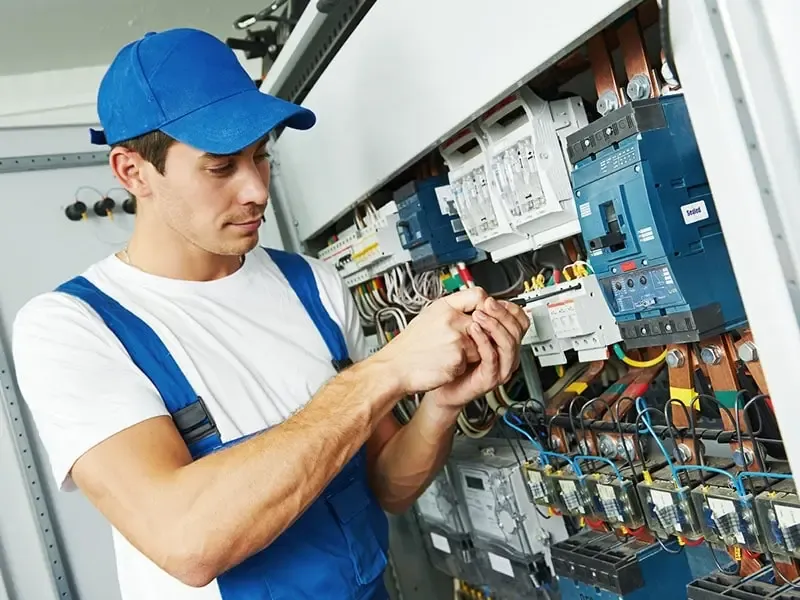
Chris Electric can review your panel and service, run a load calculation and explain your options before you choose a charger.
How Does an Electrician Determine If Your Panel Can Handle an EV Charger?
A professional assessment usually covers these steps:
- Checking the service rating
- Looking at the panel’s condition and how it is set up
- Running a load calculation on your existing home
- Reviewing the charger you want and its settings
- Planning the circuit route to the charging spot
- Considering load management if capacity is tight
- Deciding whether any other electrical work is needed
- Confirming permit and inspection requirements
The result is a clear answer about what your home can support, whether that is the charger you wanted, a lower setting or a different plan.
When Should You Contact an Electrician Before Installing an EV Charger?
Talk to an electrician before buying a charger if your home has 100 amp service, your panel is full, you run large electric loads like electric heat or a hot tub, or the panel shows rust or damage. The same goes for older electrical systems, plans for fast high-current charging or a possible service upgrade.
A 100 amp service does not always need replacing. A proper evaluation tells you for sure, instead of a guess.
Get Your Electrical Panel Checked Before Installing an EV Charger in White Bear Lake
Whether your panel can support an EV charger depends on your service rating, your home’s calculated demand, the charger you choose and the installation conditions. A 200 amp panel is not required in every home. Many homes can charge well with a lower charging current or an approved load management system.
The best first step is an assessment. Chris Electric can check your panel, run a load calculation and recommend the right setup for your home and your car. If you are ready to plan your EV charger installation, homeowners in White Bear Lake can reach out to schedule a panel assessment.
Frequently Asked Questions
Can I install a Level 2 EV charger with a 100-amp panel?
Often, yes, but not always. It depends on how much of the 100 amps your home already uses. Homes with gas heat and gas appliances often have room for a lower-current charger. Homes with electric heat and appliances may need load management or more capacity. A load calculation gives the real answer.
Do I need a 200-amp electrical panel for a Tesla charger?
No, not automatically. The Tesla Wall Connector, like most Level 2 chargers, can be set to different current levels to match the circuit. Many homes with less than 200 amps can support one at a suitable setting. Your home’s calculated load decides what setting will work.
How many amps does a Level 2 EV charger need?
It varies. Home Level 2 chargers commonly draw between 16 and 48 amps, on circuits rated from 20 to 60 amps. Many residential units run at about 30 amps or less. The right setting depends on the charger, your car and your home’s capacity.
Can I install an EV charger if my electrical panel is full?
Possibly. If the panel is listed for tandem breakers, one may free up space. If not, a subpanel can add room. Neither option adds service capacity, so the load calculation still applies. An electrician should choose the approach, not guess at it.
Can load management prevent the need for a panel upgrade?
In many cases, yes. Load management slows charging when your home is using a lot of power, which can keep the total within your existing service. It must be listed equipment, installed to code, and it does not fit every home or every charging need.
How do I know whether my home’s electrical service has enough capacity?
The main breaker shows your service rating, but not how much is left. A licensed electrician finds that with a load calculation based on your appliances, heating and cooling, and square footage. That number, not the panel size alone, shows whether a charger will fit.