The breaker trips every time the microwave and the space heater run together. Or the lights dip when the dryer kicks on. You start to wonder whether your electrical panel can keep up with everything your household now plugs in.
Common signs of an overloaded electrical panel or circuit include breakers that trip again and again, lights that dim under heavy loads, trouble adding new high-demand appliances, equipment that runs hot and electrical behavior that seems off. None of these prove the panel or service is overloaded. A professional load calculation and equipment check are what tell you for sure.
Every electrical system has limits. But the same symptom can come from very different causes. Here is how homeowners in White Bear Lake can sort out what these warning signs may mean.
What Does an Overloaded Electrical Panel Mean?
People use “overloaded panel” to describe a few different problems. They are related, but they are not the same thing.
- An overloaded circuit. One branch circuit, the wiring that feeds a group of outlets or one appliance, is asked to carry more current than its breaker allows.
- An overloaded service. The whole home’s demand is more than the electrical service is rated to deliver.
- Undersized equipment. The panel or service equipment is rated below what the home now needs or plans to add.
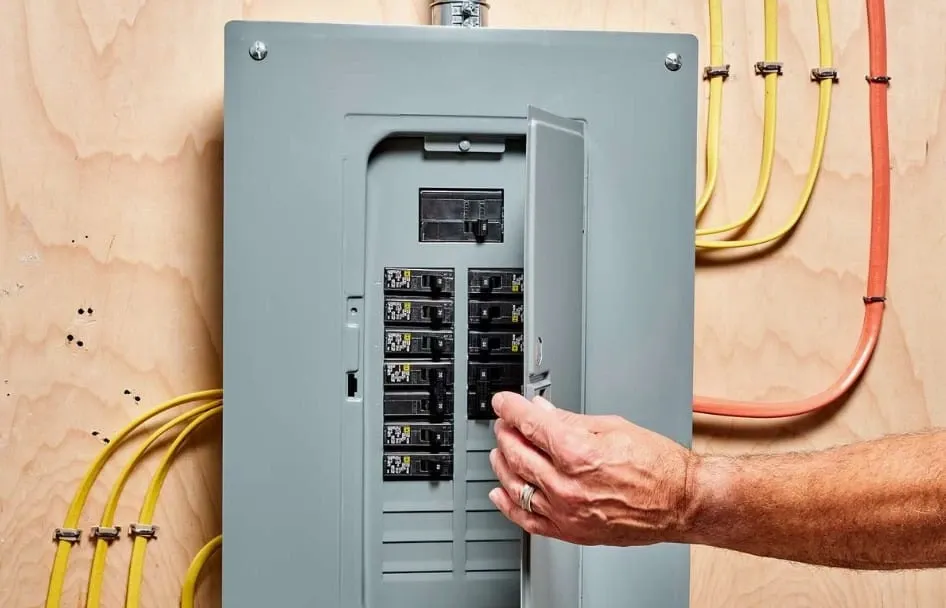
- A full panel. There are no open breaker spaces left for new circuits.
A panel packed with breakers is not automatically overloaded. Most of those circuits are lightly used most of the time. The reverse is also true. A panel can have open spaces while the service has no real capacity left for a big new load.
Overloaded Circuit vs. Overloaded Electrical Service
| Condition | What It Means | How It Is Evaluated |
|---|---|---|
| Overloaded circuit | One branch circuit carries more current than its breaker and wiring are rated for | Checking what runs on that circuit and testing the circuit for faults |
| Overloaded service | Total household demand exceeds the service rating | A code-based load calculation of the whole home |
| Full panel | No physical breaker spaces remain | Reviewing the panel model, its listing and its options |
A branch breaker that trips is doing its job on that one circuit. It does not, by itself, mean the main panel is overloaded.
7 Possible Signs Your Electrical Panel May Be Overloaded
Each of these signs is worth paying attention to. Each one can also have more than one cause, which is why the details matter.
1. Circuit Breakers Trip Frequently
A circuit breaker is a form of overcurrent protection. It shuts off power when current gets too high or when it senses a fault. Breakers trip for several reasons:
- Too many devices running on one circuit
- A short circuit, where hot and neutral or ground wires touch
- A ground fault, where current leaks to ground
- An arc fault, which arc-fault breakers detect as dangerous sparking
- A faulty appliance or damaged wiring
Repeated trips on one branch circuit point to that circuit, not to the main service. Note what was running when it tripped. Do not keep resetting a breaker that trips again and again. The circuit needs to be checked to find out whether it is an overload or a fault. Our guide to a circuit breaker that keeps tripping covers trip patterns in more detail.
2. Lights Dim When Major Appliances Start
Motors in air conditioners, well pumps and some appliances draw a burst of current when they start. That can cause a brief voltage drop and a quick flicker. A short, small dip is often normal.
Dimming that is strong, happens across the house, lasts longer or gets worse over time is different. It can point to a loose connection, a wiring problem, a utility issue or high demand on the service. If you see that pattern, have it checked. For more on why lights dim when appliances turn on, see our separate guide.
3. You Have Difficulty Adding New High-Demand Appliances
Some of the largest loads a home can add include:
- Level 2 EV chargers
- Electric ranges and dryers
- Electric water heaters
- Heat pumps and added HVAC systems
- Workshop equipment such as welders or large saws
Each of these needs to be weighed against the home’s existing calculated demand and the capacity left. Sometimes an electrician says there is not enough room for a new circuit. That is not a symptom you can see, but it is one of the clearest signs of a capacity limit. Still, adding one large appliance does not automatically mean you need 200 amp service.
4. Electrical Outlets or Equipment Become Unusually Hot
Outlets, switches and cover plates should not feel hot. Heat often comes from a loose connection, a worn receptacle, a faulty appliance or a circuit carrying a heavy load for a long time. It can also come from wiring problems inside the wall.
A hot outlet does not prove the whole panel is overloaded. It does deserve attention. Do not touch equipment you suspect is overheating. If you smell burning, see smoke or notice melted or discolored plastic, stop using that circuit and call an electrician right away. If there is fire or heavy smoke, leave and call 911.
5. You Notice Buzzing or Unusual Electrical Sounds
A faint hum from some equipment can be normal. Buzzing, crackling or sizzling from a panel, outlet or switch is not. Those sounds can come from loose connections, arcing, a failing breaker or damaged equipment.
Sounds are not a reliable way to tell whether a service is overloaded. They are a reason to get a prompt inspection. Do not open the panel cover to look for the source.
6. Multiple High-Demand Devices Cause Power Problems
Some problems only show up when several big loads run at once. Picture a winter evening with the furnace blower running, a space heater in the bedroom, the oven on, the dryer going and an EV plugged in to charge.
If one breaker trips, that circuit may be overloaded, often because two heavy loads share it. If problems show up across the house when demand is high, that can point to a service capacity concern or a supply issue. The way to tell is a professional load calculation, not guesswork.
7. Your Electrical System Cannot Accommodate Planned Upgrades
Many capacity questions come up during planning, not after a problem. Common examples include:
- A kitchen remodel with new appliances
- A finished basement with new circuits
- An EV charger installation
- A heat pump or other home electrification project
- Added circuits for a garage or workshop
Before adding major equipment, it makes sense to check what the system can support. A lack of breaker spaces alone does not mean the service is overloaded. It may just mean the panel is out of room.
Electrical Panel Overload Warning Signs: What They May Mean
| Warning Sign | Possible Explanation | Does It Confirm an Overload? | Recommended Response |
|---|---|---|---|
| Repeated breaker trips | Circuit overload, short circuit, ground fault, arc fault or a bad appliance | No | Stop resetting it and have the circuit evaluated |
| Lights dimming | Motor starting current, loose connections, utility issues or high demand | No | Note when it happens and get it checked if it is strong or worsening |
| Warm outlets | Loose connection, worn receptacle or heavy load | No | Stop using it and call an electrician |
| Buzzing equipment | Loose connections, arcing or failing equipment | No | Arrange a prompt inspection |
| No breaker spaces | Panel is physically full | No | Ask about panel options and capacity |
| New high-demand appliances | Added load on the existing service | Not on its own | Get a load calculation before installing |
| Widespread performance problems | Service capacity, supply issues or a neutral problem | No | Schedule a professional evaluation |
How Much Electrical Load Can Your Panel Handle?
Homes commonly have 100, 150 or 200 amp service. That rating is the most current the service is built to deliver at one time. It is a ceiling, not a measure of how much you use.
The number on the main breaker is a starting point. It does not tell you how much more load you can safely add. The panel’s bus rating, the service wires, the meter equipment and how everything is installed all play a part. The home’s existing demand matters just as much. Leave the panel cover on and let an electrician confirm the real ratings.
Is a 100-Amp Panel More Likely to Be Overloaded?
A 100 amp service has less capacity than a 200 amp service, so it reaches its limit sooner as loads grow. But a home with gas heat, a gas range and moderate electric use may have plenty of room at 100 amps.
A home with larger or growing electric loads may need more capacity or an approved load management setup. A 100 amp panel is not outdated or unsafe just because of its rating.
Can a 200-Amp Panel Still Be Overloaded?
Yes. A larger service has more room, but it still has limits. Electric heat, several EV chargers, a hot tub and an electric water heater can add up fast. Planned equipment matters too. A load calculation is the only way to know whether a 200 amp service fits a given home.
How Do Electricians Determine Whether Your Electrical Panel Is Overloaded?
They use a load calculation, a method set out in the National Electrical Code for estimating a home’s real demand. It considers:
- The existing service rating
- General lighting and outlet loads based on floor area
- Heating and cooling systems
- Electric water heating
- Cooking and laundry equipment
- EV charging
- Other fixed appliances
- Planned additions
Demand factors account for the fact that not everything runs at full power at once. That is why adding up the amp labels on every appliance gives the wrong answer. Where code allows it, an energy management system that limits loads during peak demand can also count in the calculation.
Can You Check Electrical Panel Capacity Yourself?
You can gather helpful information. List your major appliances and their nameplate ratings. Note your heating type and anything you plan to add. Find any records from past electrical work. That list helps an electrician work faster.
A homeowner’s estimate is not a substitute for a code-compliant load calculation. Do not open the panel, measure live current or handle service wires.
Does a Full Breaker Panel Mean It’s Overloaded?
No. A full panel has run out of physical spaces. That is a separate issue from service capacity, which is about how much current the whole home draws.
An electrician has several ways to handle a full panel:
- Checking which breaker types the panel is listed to accept
- Adding an approved subpanel to create more spaces
- Confirming how much service capacity is actually left
- Replacing the panel if it is unsuitable or damaged
A subpanel adds room for circuits, but it does not add capacity. It is still fed by the same service. Tandem breakers, which fit two circuits in one space, are only allowed where the panel is specifically listed for them. Leave breaker changes to a licensed electrician.
Can Faulty Wiring Look Like an Electrical Overload?
Yes, and it happens often. Many symptoms blamed on an overloaded panel turn out to be faults. Common culprits include:
- Loose connections at outlets, switches or the panel
- Short circuits and ground faults
- Arc faults in damaged wiring
- Defective appliances
- Worn or damaged receptacles
- Problems on the utility side
- A loose or failing neutral connection, which can make lights brighten in one room and dim in another
A bigger panel will not fix a wiring fault. An electrician needs to find out whether the cause is too much demand or a defect before anyone talks about replacing equipment.
When Should Electrical Panel Problems Be Treated as Urgent?
Some signs call for immediate or prompt action:
- A burning smell from the panel, an outlet or a switch
- Visible smoke
- Sparks or arcing
- Melted or scorched parts
- Equipment that is hot to be near
- Shocks from outlets, switches or appliances
- Lights that surge very bright or very dim
- Widespread power problems with no clear cause
These signs do not always mean an overload, but they can mean a dangerous condition. If there is fire, smoke or an immediate threat, leave the area and call 911. Do not touch damaged equipment or work the breakers on a damaged panel. For problems that keep coming back but are not an emergency, schedule a professional assessment.
What Can Homeowners Safely Check Before Calling an Electrician?
A few simple observations can help an electrician understand the problem faster:
- Write down which appliances were running when a breaker tripped.
- Note when lights dim and which rooms are affected.
- List any electrical equipment you added recently.
- Find any records from past electrical work or inspections.
- Note whether one circuit or several are affected.
- Watch for warning signs without touching anything suspicious.
- Gather model numbers and ratings for major appliances.
These steps help describe the problem. They cannot confirm whether the service is overloaded.
Do not open the panel cover, touch wiring, test live circuits or swap a breaker for a larger one. Do not replace the main breaker, add circuits yourself or bypass protective devices. Avoid resetting a breaker over and over, and stay away from hot or damaged parts.
Are Older Homes More Likely to Have Electrical Capacity Problems?
Older homes were often wired for far fewer appliances. Over the years, kitchens get remodeled, basements get finished and new equipment gets added. Past owners may have made changes that were never planned around the full load. The panel itself may also show wear.
Age alone does not decide whether a service is overloaded. Some older homes have already been upgraded and have plenty of room. Some newer homes do not have enough capacity for major projects like EV charging or a switch to electric heat.
Can Minnesota Winters Put More Demand on Your Electrical System?
They can in some homes. Winter is when many households run portable space heaters, electric baseboard heat or heat pumps with electric backup. Heated garages, holiday lighting and more time indoors add to the load.
Actual demand depends on the equipment in each home. Many White Bear Lake homes heat with natural gas and see only a small winter increase. Cold weather does not make a panel overload by itself. But winter loads are worth counting when an electrician evaluates capacity, especially in homes with electric heat.
What Can an Electrician Do if Your Electrical System Is Overloaded?
The fix depends on the diagnosis. Possible steps include:
- Reviewing existing loads and how circuits are arranged
- Repairing faulty circuits, connections or equipment
- Adding dedicated circuits for heavy appliances
- Setting up approved load management
- Replacing damaged components
- Upgrading service capacity when the load calculation calls for it
- Replacing panel equipment that is unsuitable
Not every problem needs a bigger panel. A dedicated circuit can stop one circuit from overloading, but it does not add total service capacity. Installing a larger breaker on the same wire is never a fix. It removes the protection the breaker is there to provide.
Does an Overloaded Electrical Panel Need to Be Replaced?
Not always. Panel replacement and a service upgrade are two different jobs. A panel may need replacing because it is damaged, worn or not compatible with needed breakers. Raising the service capacity can involve more work, such as new service wires, a new meter socket and coordination with the utility. The right step depends on a professional assessment.
Should You Upgrade From 100 Amps to 200 Amps?
Only if the home needs it. The decision depends on your existing calculated demand, the major appliances you plan to add, EV charging needs, any electrification plans and the condition of your service equipment. Load management can sometimes keep a home within its current service.
For a full side-by-side look, see our guide to 100 amp vs 200 amp electrical panels. If you are planning to charge an EV, our article on EV charger panel requirements covers that question in more depth.
What Does Minnesota Electrical Code Say About Electrical Service Capacity?
Minnesota adopted the 2026 National Electrical Code effective August 17, 2026. According to the Minnesota Department of Labor and Industry, permits filed before that date must comply with the 2023 NEC. Permits filed on or after it must comply with the 2026 NEC.
The adopted code sets the rules for service sizing, load calculations, equipment ratings, branch-circuit protection and installation. Service work and new circuits generally require an electrical permit and inspection. A code change does not mean existing homes must upgrade their service. A licensed electrician will apply the edition that fits your permit date.
Electrical Panel Overload Concerns in White Bear Lake, MN
Around White Bear Lake, capacity questions often come up during kitchen renovations, basement finishes and garage projects. They also come up with EV charger installs and when homeowners add electric heat for winter. Older systems may face these questions sooner.
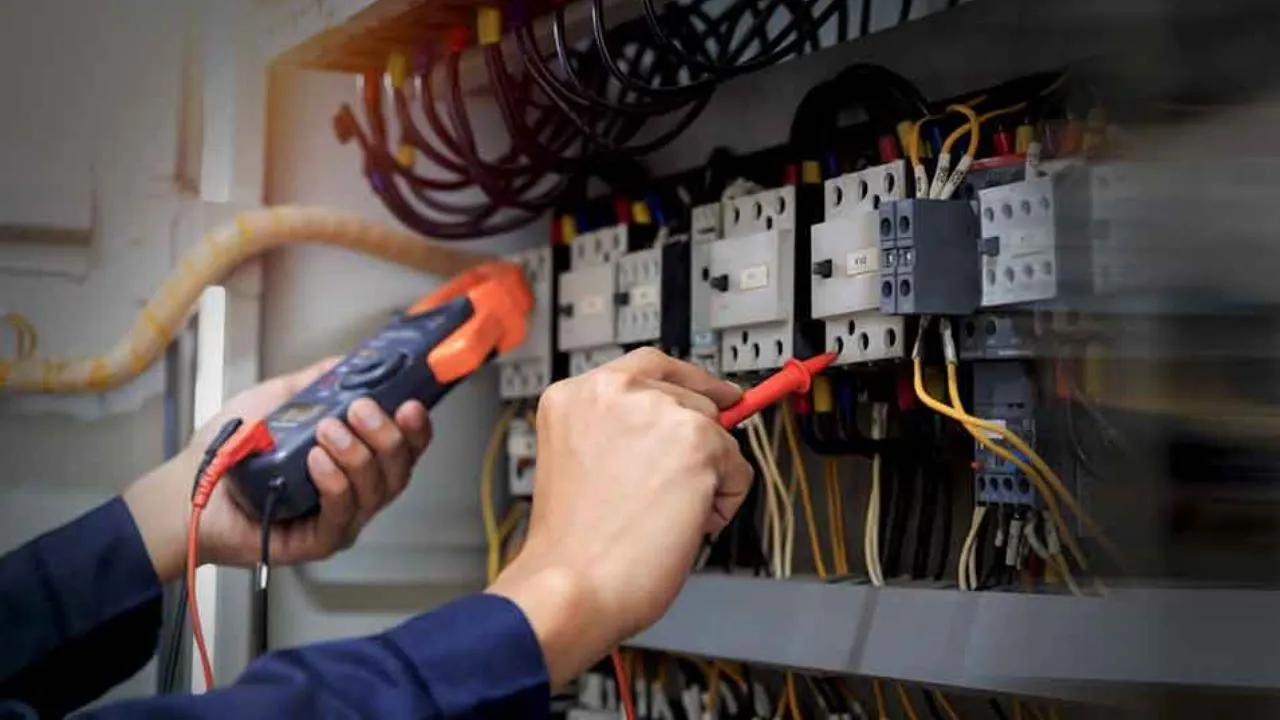
A panel capacity assessment before you add major loads helps you plan with real numbers instead of guesses. Chris Electric can review your panel, check your existing loads and tell you what your current service can support.
How Does an Electrician Check Whether Your Panel Is Overloaded?
A professional evaluation usually follows these steps:
- Talking through your electrical concerns and when they happen.
- Identifying the service and panel ratings.
- Reviewing major electrical loads in the home.
- Checking the condition of the panel and related equipment.
- Performing the applicable load calculation.
- Investigating the symptoms you reported.
- Factoring in planned appliances or projects.
- Reviewing load management options where they fit.
- Deciding whether repairs, new circuits, a panel replacement or a service upgrade is needed.
One look at the panel cannot tell anyone the home’s full available capacity. A proper evaluation helps you avoid both an undersized system and an upgrade you do not need.
When Should You Call an Electrician About Your Electrical Panel?
Reach out for an electrical panel inspection if you notice any of these:
- Breakers that trip again and again
- Strong or repeated changes in lighting
- Damage at the panel
- Signs of a wiring fault
- Uncertainty about how much capacity you have
- A major renovation coming up
- Plans for an EV charger or another high-demand appliance
- Questions about moving from 100 amps to 200 amps
Most of these call for a routine visit. Burning smells, smoke, sparks and shocks are different. Treat those as urgent, and call 911 if there is fire.
Concerned About Your Electrical Panel in White Bear Lake?
Breakers that keep tripping, lights that act up and trouble adding major equipment can all be reasons to check your electrical capacity. They do not prove your panel is overloaded. Many of these problems trace back to a single circuit, a loose connection or a faulty appliance.
A professional load calculation and equipment check are what show whether your service has a real capacity limit. That answer helps you fix the right problem and skip work you do not need.
If you live in White Bear Lake and have questions about your panel, Chris Electric can help. Contact us to schedule an electrical panel inspection or capacity assessment.
Frequently Asked Questions
What are the most common signs of an overloaded electrical panel?
Breakers that trip often, lights that dim when large appliances run and trouble adding new circuits are the most common. Warm outlets and buzzing equipment can also show up. These signs have other possible causes, so a load calculation and inspection are needed to confirm an overload.
Can a 200-amp electrical panel become overloaded?
Yes. A 200 amp service has more room than a 100 amp service, but it still has limits. Homes with electric heat, several EV chargers, a hot tub and other large loads can reach that limit. A load calculation shows how much capacity is left.
Does a breaker that keeps tripping mean the panel is overloaded?
Usually not. A breaker that trips often points to a problem on that one circuit, such as too many devices, a short circuit, a ground fault or a faulty appliance. It says little about the whole service. Have the circuit checked instead of resetting it over and over.
Can an overloaded electrical system cause lights to flicker?
It can, but flickering has many causes. A loose bulb, a worn switch, a loose connection, motor starting current or a utility issue are all common. Flickering that is widespread, strong or getting worse should be checked by an electrician.
Does a full electrical panel need to be upgraded?
Not always. A full panel is out of breaker spaces, which is different from being out of capacity. Depending on the panel, an electrician may add a subpanel or use breakers the panel is listed for. Replacement makes sense when the panel is unsuitable or damaged.
Can I add an EV charger to a 100-amp electrical service?
Often, yes. Many 100 amp homes can support a Level 2 charger at a lower current setting or with load management. Homes that already run heavy electric loads may need more capacity. A load calculation will show whether the charger fits.
How does an electrician determine available electrical capacity?
They confirm the service and panel ratings, list the home’s major loads and apply the load calculation method in the adopted electrical code. Demand factors account for loads that rarely run at the same time. The result shows how much capacity is used and how much is left.