The lights blink during a summer storm. Everything seems fine, but a week later the garage door opener stops working. A voltage spike may be to blame. A spike is a burst of extra voltage that lasts a fraction of a second, and it can damage the electronics inside your appliances.
A whole-house surge protector is built to stop much of that energy at the door. It sits at your electrical panel and watches the voltage on every circuit. When a spike hits, it reacts in an instant and diverts the extra surge current away from your devices. Here is how that works, and what it can and cannot do.
What Is a Whole-House Surge Protector?
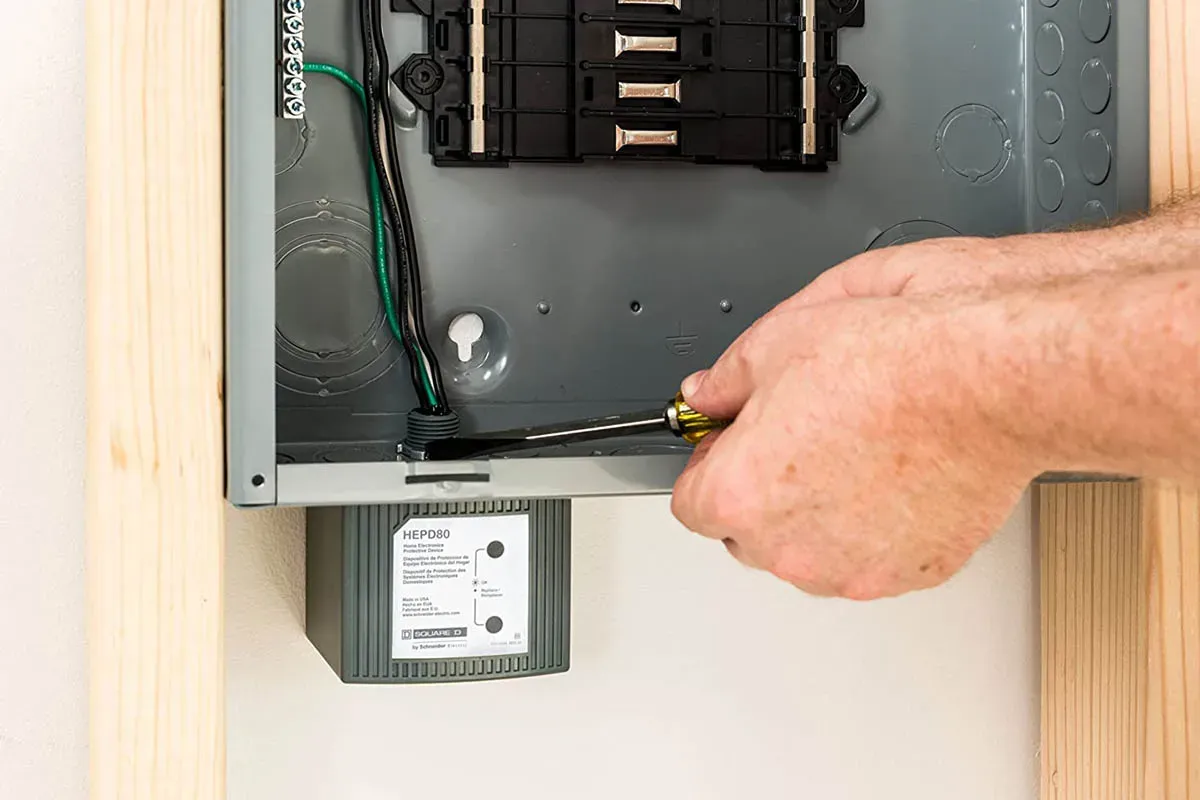
A whole-house surge protector is a surge protective device, or SPD, that guards your home’s entire electrical system from one spot. Electricians install it at or near the main electrical panel, where power from the utility enters the house.
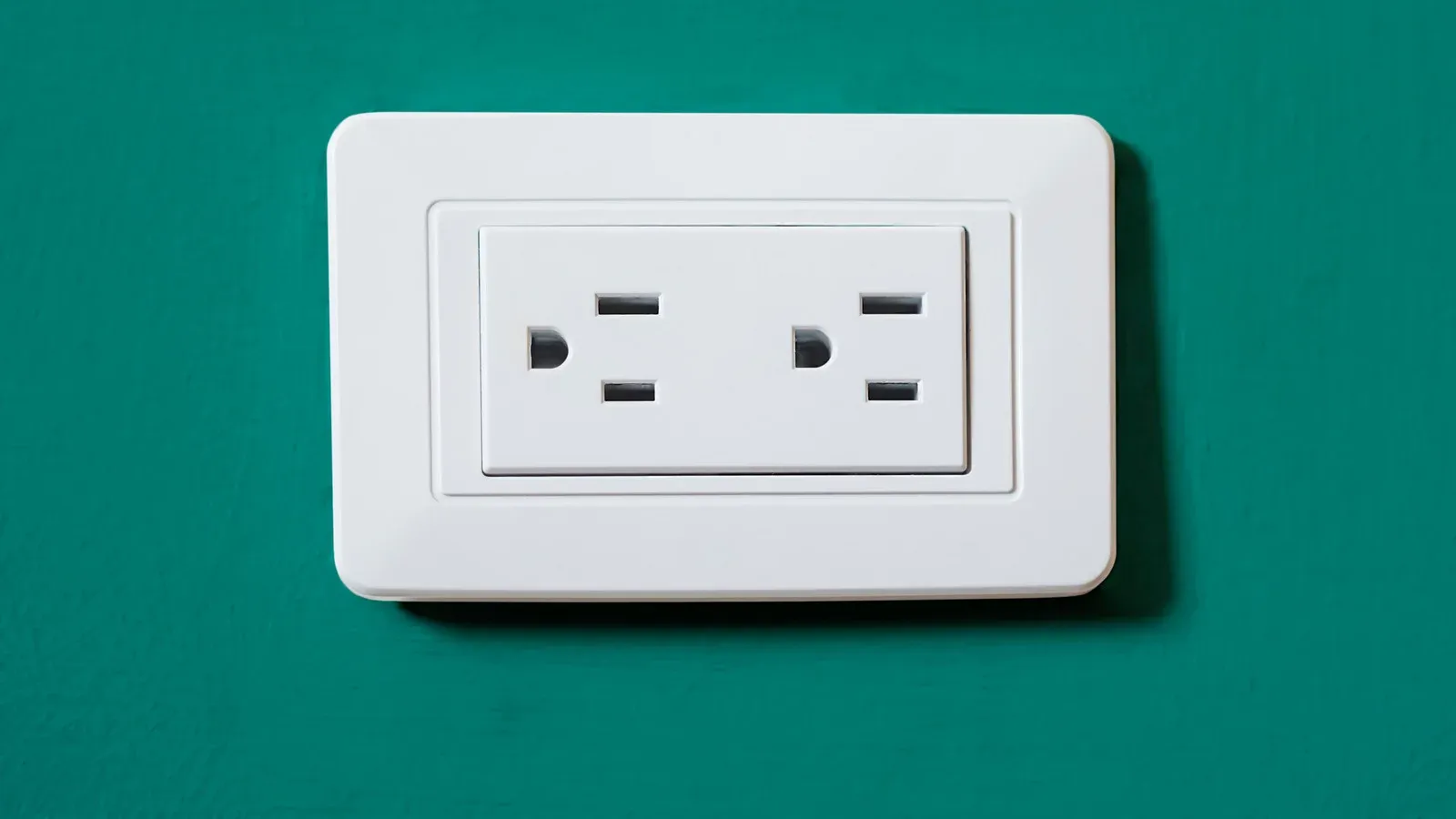
That location sets it apart from a plug-in power strip. A power strip only protects what is plugged into it. A whole house surge protector covers the wiring that feeds every circuit, including hardwired equipment like your furnace and central air.
Most units are small boxes mounted on or inside the panel. Many have indicator lights that show whether the device is still protecting your home.
How Does a Whole-House Surge Protector Work?
A whole-house surge protector works by watching the voltage at your panel. At normal voltage, it does nothing. When a surge pushes voltage past its set limit, parts inside the device switch on in a few billionths of a second. They give the surge current an easier path away from your circuits, then reset once the surge passes.
Here is that process step by step.
1. Normal power flows through. Most homes get about 120 volts at standard outlets and 240 volts for large appliances. At these levels, the protector lets power pass without any effect.
2. A surge arrives. A transient overvoltage is a very short jump in voltage. It may last less than a thousandth of a second, but it can climb far above normal levels.
3. The device reacts. Most whole-house SPDs use metal oxide varistors, called MOVs. An MOV works like a pressure valve. At normal voltage it blocks current. Once voltage passes its threshold, its resistance drops and it starts to conduct. Some devices use other parts, but the idea is the same.
4. Surge current takes the easier path. Much of the surge current now flows through the device instead of through your appliances. It is often said that the protector dumps all the extra electricity into the ground. In reality, it diverts current between the power wires, the neutral and the ground, and some of the energy turns into heat inside the device.
5. Voltage is limited, not erased. The protector clamps voltage down to a lower level. Some extra voltage, called let-through voltage, still reaches your circuits. The goal is to keep it low enough for your electronics to handle.
6. Power returns to normal. Once the surge passes, the MOVs go back to blocking current. Each large surge wears them down a little, and after enough hits the device needs to be replaced.
Installation matters a lot here. The wires connecting the protector to the panel should be short and straight, because long or looped wires let more voltage through. The home’s grounding and bonding also need to be in good shape. A surge protector works with the grounding system. It does not replace it.
What Happens When a Power Surge Hits Your Home?
Picture lightning striking a utility line a few blocks away. A burst of energy travels down the line toward several homes, including yours.
The surge reaches your panel in a split second. The protector conducts, and much of the energy is diverted before it spreads to your branch circuits. A smaller, clamped surge travels on to the kitchen and the furnace. Your refrigerator sees a quick bump in voltage instead of a large spike, and most of the time you never notice.
What Causes Power Surges in a Home?
Power surges in homes come from both outside and inside the house. They are not all equally common or equally harmful.
- Lightning. Minnesota summers bring plenty of thunderstorms. A strike near power lines can send a large surge into many homes at once. These surges are less common but carry the most energy.
- Utility grid events. Switching equipment or clearing a fault on the grid can send small surges down the line.
- Power coming back on. The sudden return of power after an outage can create spikes.
- Motors inside the home. Air conditioners, refrigerators and sump pumps create small surges each time they start or stop. These are the most frequent surges, but also the smallest.
- Wiring problems. Loose connections and damaged wiring can cause voltage swings that look like surges.
A surge is not the same as a sustained overvoltage, which is high voltage that lasts for seconds or longer, often from a failed neutral connection. Surge protectors are not built for that, and it can damage them. It is also not the same as an outage, which a surge protector cannot prevent.
What Does a Whole-House Surge Protector Protect?
Almost every modern appliance has a circuit board inside, and circuit boards are sensitive to voltage spikes. A whole-house surge protector helps reduce surge risk for:
- Refrigerators, ranges, dishwashers and microwaves
- Televisions, computers and gaming systems
- Furnaces, central air and heat pumps
- Washing machines and dryers
- Smart thermostats, doorbells and garage door openers
The level of protection is not the same for every home or every surge. It depends on the size of the surge, the device’s ratings, the installation and the condition of your wiring. Surges can also enter through cable, internet and phone lines, which a panel device does not cover. No surge protector can prevent every kind of electrical damage.
Can a Whole-House Surge Protector Stop Lightning Damage?
It can help with some lightning damage, but not all of it.
Most lightning damage in homes comes from nearby strikes that send energy into the wiring through power lines or the ground. A whole-house surge protector can limit many of these surges.
A direct strike on your home is another story. The energy is so large that no surge protector can promise to stop it. That calls for a separate lightning protection system, designed by a specialist.
This is why layered surge protection works best. The panel device handles large surges coming in from outside. Plug-in protectors at sensitive electronics catch what gets past it, along with smaller surges made inside the home.
Whole-House Surge Protector vs. Power Strip: What’s the Difference?
These two devices work as a team rather than as rivals.
| Whole-house surge protector | Plug-in surge protector | |
|---|---|---|
| Where it goes | At the main electrical panel | At the wall outlet |
| What it covers | Every circuit, including hardwired equipment | Only what is plugged into it |
| Main job | Stops large surges coming into the house | Handles smaller surges near the device |
| Installed by | A licensed electrician | The homeowner |
Not every power strip is a surge protector. Some only add outlets. A real one will be listed to UL 1449, the safety standard for surge protective devices, and will say so on the label.
Where Is a Whole-House Surge Protector Installed?
A whole-house SPD goes at the main service panel or close to it. The exact spot depends on the type of device and how your home’s service is set up.
- Type 1 SPDs can be installed on the line side of the main breaker, between the utility service and the main disconnect, where power first enters the home. They can also go on the load side.
- Type 2 SPDs are installed on the load side of the main breaker, usually in the panel or right beside it. This is the most common choice for homes.
Each device also has a surge current rating, which shows how much surge current it can handle. The right model depends on your panel, your service size and the manufacturer’s instructions.
Is a Whole-House Surge Protector Worth It?
For many homeowners, yes. Think about what it would cost to replace a furnace control board, a refrigerator, a washer and a TV. One large surge can damage several of these at once. Smaller surges do harm too, wearing down electronics until one stops working with no clear cause.
The main whole house surge protector benefits come from coverage. One device helps guard the whole home, including equipment you cannot plug into a strip. Paired with plug-in protection for sensitive electronics, it handles surges from both outside and inside.
It does have limits. It will not stop a direct strike, prevent outages or fix wiring problems, and it wears out after enough surges. Still, for a home full of appliances and electronics, it is one of the simplest ways to reduce surge risk.
Do You Need an Electrician to Install a Whole-House Surge Protector?
Yes. The work happens inside the main electrical panel, where some parts stay live even with the main breaker off. This is not a safe DIY project.
A licensed electrician will choose an SPD that matches your panel and service size, keep the connections short and direct, and check that your grounding and bonding are in good condition. They will also handle any permit and inspection the job needs.
Codes now treat surge protection as standard. Under the National Electrical Code edition Minnesota currently uses, a surge protective device is required when a home’s electrical service is installed or replaced. That makes surge protection a natural part of any electrical panel upgrade.
If you want to add protection to your current panel, our team offers whole home surge protector installation and checks your panel and grounding during the visit.
Protect Your Home’s Electrical System in White Bear Lake, MN
A whole-house surge protector stops much of a surge at the panel before it reaches your appliances. It does not catch every surge, and it does not last forever. But with good grounding and quality plug-in protectors, it gives your home a strong first layer of defense.
If your panel is older, your lights flicker during storms or electronics have failed with no clear reason, a panel assessment is a good next step. Homeowners in and around White Bear Lake can reach out to our team with questions about surge protection or to schedule an installation.
Frequently Asked Questions
How long does a whole-house surge protector last?
There is no set number of years. Each surge wears down the protective parts a little, so a home that sees frequent or large surges will use one up faster. Many devices have an indicator light that shows when protection is lost.
Does a whole-house surge protector work without power?
The MOVs inside do not need power to react, so they can still respond to a surge on lines that are down. The indicator lights do need power, so they stay dark during an outage and come back on when power returns.
Can a whole-house surge protector protect against power outages?
No. It limits short voltage spikes but cannot keep power on when the grid goes down. For that, look at a standby generator or battery backup. A surge protector still helps in that setup, since spikes can happen when power is restored.
How do you know if a whole-house surge protector is working?
Check the indicator lights. Most models show a green or steady light when protection is active and change color or go dark when it is not. The meaning varies by brand, so read the label. If a light shows a problem, have an electrician replace the unit.
Do you still need surge protector power strips?
For expensive electronics, yes. A whole-house device lets some voltage through, and many small surges start inside the home. A plug-in protector listed to UL 1449 near your computer or TV adds a second layer.