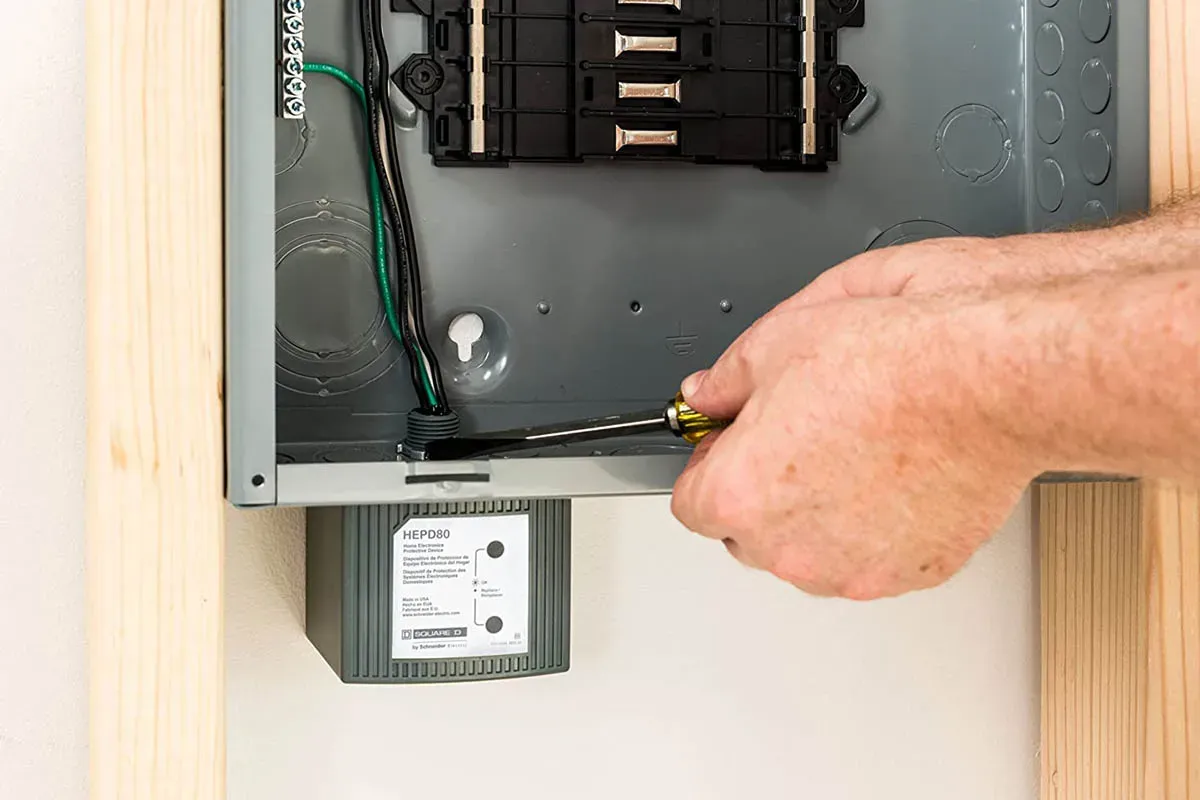
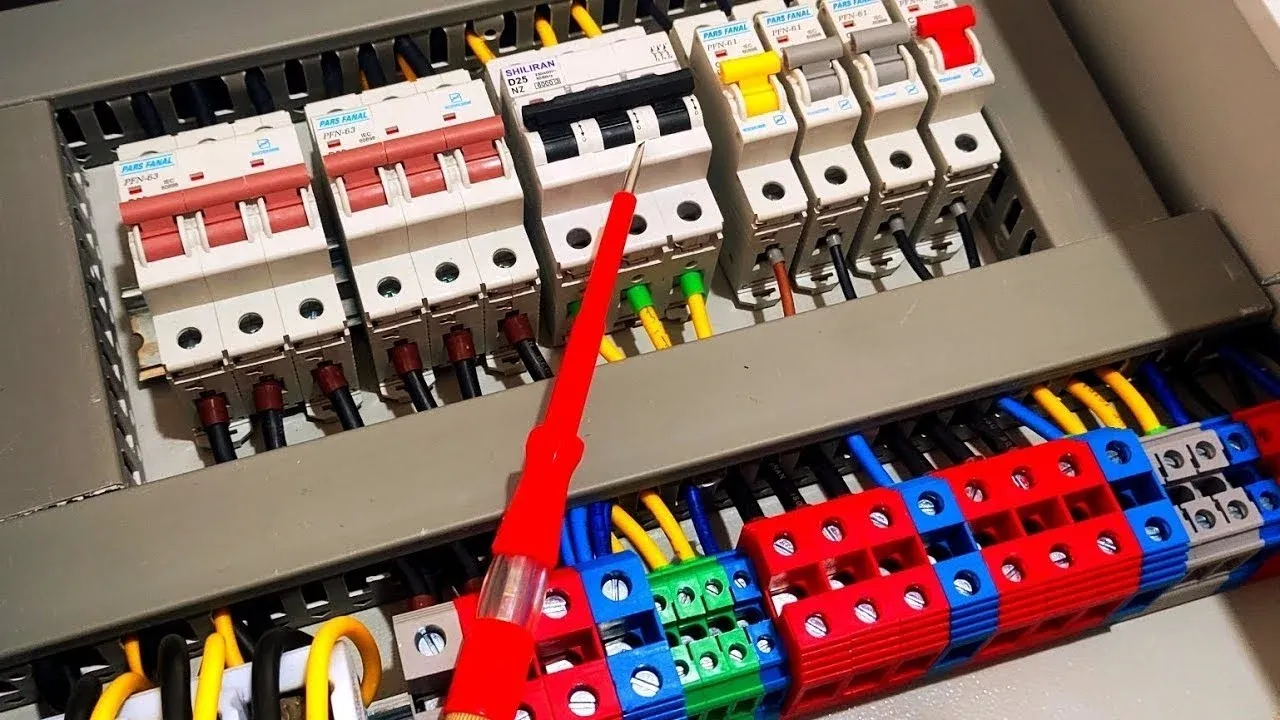
Take the cover off an outlet, switch or light fixture and you will usually see wires in two or three colors. Those colors help electricians tell which wire brings power in, which one carries it back and which one is there for safety.
In most US homes, black and red wires are hot conductors that carry power from the panel. White wires are usually neutral and carry current back. Green or bare copper wires are equipment grounds. But the electrical wire color code only gives clues. It cannot prove what a wire is doing or whether it is live.
This guide explains what each color usually means, what the code actually requires and why older homes in White Bear Lake and elsewhere do not always follow the pattern.
What Is an Electrical Wire Color Code?
A wire color code is a system for identifying conductors by the color of their insulation. A conductor is the metal wire that carries current, and the insulation is the plastic or rubber coating around it.
Colors make work faster and safer, because they show at a glance which wire is which. There are two layers to it:
- Code rules. The National Electrical Code (NEC), also known as NFPA 70, sets a few firm requirements. It reserves certain colors for neutral and ground wires, and it says hot wires cannot use those colors.
- Trade conventions. Beyond those rules, electricians and wire makers follow common habits, like using black and red for hot wires. These are widely used, but they are not required in every case.
The colors in a real home also depend on when it was wired and what changes came later, so colors are a starting point, not a final answer.
Electrical Wire Color Code Chart: US Wiring Colors and Their Meanings
| Wire Color | Common Meaning | Typical Application | NEC Requirement or Convention |
|---|---|---|---|
| Black | Hot (ungrounded) | Outlets, lights, switches, 240 volt circuits | Convention. Any color other than white, gray or green may be used for a hot wire. |
| Red | Hot (ungrounded) | Second hot on 240 volt circuits, 3-way switches, smoke alarm interconnects | Convention |
| White | Neutral (grounded) | Return path on 120 volt circuits | Required color for the neutral, with limited exceptions when reidentified |
| Gray | Neutral (grounded) | Often used for a second neutral system in commercial buildings | Required color option for the neutral |
| Green, or green with yellow stripe | Equipment ground | Grounding outlets, fixtures and metal boxes | Required. Green may not be used for hot or neutral wires. |
| Bare copper | Equipment ground | Ground wire inside most house cable | Permitted for equipment grounding |
| Blue | Hot (ungrounded) | Third phase on 120/208 volt systems, sometimes switch legs or travelers | Convention |
| Yellow | Hot (ungrounded) | Often a phase on 277/480 volt commercial systems, sometimes travelers | Convention |
| Brown | Hot (ungrounded) | Often a phase on 277/480 volt commercial systems | Convention |
| Orange | Hot (ungrounded) | The “high leg” on certain 4-wire delta systems | Marking required on the high leg of certain delta systems. Elsewhere, a convention. |
Only the neutral colors and the ground colors are fixed by the code. Every other color is a habit, and habits vary from one building to the next. A chart like this is a reference, not a test.
Do not confuse wire colors with cable jacket colors. Many brands of house cable use a colored outer jacket to show wire size, such as yellow for 12 gauge and orange for 10 gauge. That jacket says nothing about what the wires inside do.
What Do Different Electrical Wire Colors Mean?
Black Electrical Wire: Common Hot Conductor
Black is the most common color for a hot wire in US homes. A hot wire, also called an ungrounded conductor, carries current from the breaker to the outlet, light or appliance. In standard house cable, the black wire is the one connected to the breaker.
A black wire can be dangerous even when nothing seems to be running. With the light switched off or the appliance unplugged, the black wire feeding that box may still be live. Only proper testing by a trained electrician can confirm it.
Red Electrical Wire: Additional Hot Conductor
Red usually marks a second hot wire. You will often see it in:
- 240 volt circuits for dryers, ranges and some water heaters, where black and red each carry one leg of power
- 3-way switches, where red and black may run between two switches that control the same light
- Multiwire branch circuits, where two hot wires share one neutral
- Hardwired smoke alarms, where a red wire may link the alarms so they sound together
Because red has so many uses, it does not mean the same thing in every box. A red wire might be live all the time, only some of the time or not at all, depending on the circuit.
White Electrical Wire: Neutral Conductor
White is the code color for the neutral, also called the grounded conductor. In a typical 120 volt circuit, the neutral carries current back to the panel after it passes through a light or appliance. It connects to the neutral bar in the panel.
White does not mean safe. When a circuit is in use, the neutral carries just as much current as the hot wire. On a shared neutral or a miswired circuit, a white wire can carry current even when you would not expect it.
There is also an exception. In some cable runs, a white wire can be used as a hot wire if it is reidentified, usually with black or red tape or marker at each end. This is common on older switch loops and on 240 volt circuits that do not need a neutral. If the marking is missing or worn off, the white wire may look like a neutral when it is not.
Green or Bare Copper Wire: Equipment Grounding Conductor
Green and bare copper wires are equipment grounding conductors. They connect metal boxes, fixture frames and the ground slot on outlets back to the panel.
The ground wire does not carry current during normal use. Its job is to give fault current a safe path. If a hot wire touches a metal part, the ground carries that current back to the panel fast enough to trip the breaker. Without it, the metal part could stay energized and shock the next person who touches it.
Ground and neutral are bonded together at the main panel, but they are not the same thing. Swapping them or tying them together in the wrong place can create a shock hazard.
Blue and Yellow Electrical Wires
Blue and yellow are less common in houses. They sometimes show up as switch legs or travelers in conduit, where an electrician needed more colors to keep wires straight. In commercial buildings, blue is often one phase of a 120/208 volt three-phase system. None of these uses are universal.
Brown, Orange, and Other Wire Colors
Brown, orange and yellow are commonly used for the three phases of 277/480 volt systems in commercial buildings. Orange also has a specific role. On certain 4-wire delta systems, one leg has a higher voltage to ground, called the high leg, and the code requires it to be marked orange or by another effective means. These colors rarely appear in a typical single-family home.
What’s the Difference Between Hot, Neutral, and Ground Wires?
Each of the three wires in a typical circuit has a different job.
| Wire | Usual Color | What It Does | Carries Current in Normal Use? |
|---|---|---|---|
| Hot | Black, red or another color | Brings power from the breaker to the load | Yes |
| Neutral | White or gray | Carries current back to the panel | Yes |
| Ground | Green or bare copper | Gives fault current a safe path so the breaker trips | No |
The hot and neutral work as a pair to complete the circuit, while the ground stands by as a safety path. A circuit can seem to work fine with a wire in the wrong place, which is why miswiring often goes unnoticed.
What Does the National Electrical Code Say About Wire Colors?
The NEC is a model code that becomes law only when a state adopts it. Minnesota adopted the 2026 NEC effective August 17, 2026. According to the Minnesota Department of Labor and Industry, electrical permits filed before that date follow the 2023 NEC, and permits filed on or after it follow the 2026 NEC.
For wire colors, the code is fairly narrow. It requires:
- Neutral wires to be white or gray, or marked with three white or gray stripes
- Ground wires to be bare, green or green with a yellow stripe
- Hot wires to be any color other than white, gray or green
- A posted color scheme in buildings that have more than one voltage system, so each system’s hot wires can be told apart
- Orange marking on the high leg of certain delta systems
The code does not require black for one hot wire and red for another. Those choices are conventions that most electricians follow because they make work easier and safer.
What Wire Colors Are Common in Residential Homes?
Most homes built in recent decades use plastic-sheathed cable. A two-wire cable holds a black hot, a white neutral and a bare ground, and a three-wire cable adds a red hot. Behind it all is a 120/240 volt single-phase service: two hot legs, each 120 volts to the neutral and 240 volts to each other.
Standard outlet and lighting circuits use one hot leg, so you will see black, white and bare. At a switch, the black wire usually connects to the switch while the neutral passes through the box. Dryers and ranges use both legs, with black and red as the hots plus a neutral and ground. Some 240 volt loads, like many water heaters and baseboard heaters, need no neutral and may use a black wire and a white wire marked as hot.
Why Do Some Homes Have Different Wire Colors?
Many homes do not match the textbook pattern. Wires in conduit can come in many colors, while cable has a fixed set. Older switch loops often use a white wire as a hot, sometimes without marking. Remodels and DIY work can add wires that follow no clear scheme. And a different service, like a three-phase supply in a converted commercial building, brings its own colors.
A familiar color pattern does not mean the wiring is safe or correct. It only means it looks the way you expect.
Do Older Homes Follow the Same Electrical Wire Color Codes?
Not always. Homes in White Bear Lake were built across many decades, and the wiring often shows its age.
In older homes, you may run into:
- Cloth or rubber insulation that has darkened, so black and white wires look almost the same
- Knob and tube wiring, which has no ground wire
- Two-wire cable without a ground, from before grounded outlets were standard
- Brittle insulation that may crack when the wire is moved
None of this automatically means the wiring is unsafe. But when colors cannot be trusted, an inspection by a licensed electrician is the safest way to know what you have. If the wiring turns out to be worn or ungrounded, whole home rewiring may be worth discussing.
Can You Identify a Wire Safely by Its Color?
No. Color tells you what a wire is meant to do. It cannot tell you what the wire is actually doing or whether it is live.
Colors mislead for many reasons. Someone may have wired a box incorrectly. The tape on a reidentified white wire may have fallen off. Old insulation may be too faded or burned to read. A shared neutral may carry current from another circuit.
That is why homeowners should not touch, disconnect, test or reconnect wires based on a color chart. Electricians confirm conditions with proper test equipment and safe procedures before touching anything.
Common Electrical Wire Color Mistakes
“White wires are safe to touch.” A neutral carries current whenever the circuit is in use. It can shock you.
“Only black wires are hot.” Red, blue and even a reidentified white wire can be hot.
“Neutral and ground are the same.” They are bonded at the main panel, but they do different jobs and must stay separate everywhere else.
“Same color, same job.” Two red wires in the same box can belong to different circuits.
“Wire colors are the same worldwide.” They are not. In much of Europe, brown is commonly the live wire and blue is the neutral, which is very different from US practice.
Electrical Wiring Safety for White Bear Lake Homeowners
Most homeowners never think about wire colors until something changes. Buying an older home, remodeling a kitchen or bathroom, upgrading the panel or adding a large appliance can all bring hidden wiring into view. That is a good time to have a professional take a look.
Chris Electric can check the wiring in homes in White Bear Lake and nearby towns and explain what we find in plain terms. For more everyday habits, see our electrical safety tips for homeowners.
When Should You Call an Electrician About Wiring?
Call an electrician if you notice:
- Wires you cannot identify, or colors that do not make sense
- Cracked, brittle or melted insulation
- Loose or exposed wiring in boxes, attics or basements
- Circuits that are labeled wrong or not at all
- A burning smell, or outlets and switches that feel warm
- Breakers that trip again and again
- Wiring from past projects you are unsure about
An electrician can test the circuit, confirm what each wire does and fix problems safely, without guessing from insulation color. If you see smoke, sparks or flames, leave the home and call 911.
Get Professional Help With Electrical Wiring in White Bear Lake, MN
Wire colors are a useful guide. Black and red are usually hot, white is usually neutral and green or bare copper is the ground. But the code only fixes a few of those colors, and real homes do not always follow the pattern.
Never use color alone as the basis for electrical work. Old, damaged or unfamiliar wiring deserves a professional look, and Chris Electric can help. Homeowners looking for an electrician in White Bear Lake can reach out to set up a wiring check or talk through a project.
Frequently Asked Questions
What color wire is hot in a house?
Black is the most common hot wire in US homes, and red is the usual second hot on 240 volt circuits and 3-way switches. Other colors, and even a white wire marked with tape, can also be hot. Only testing by a qualified electrician confirms which wire is live.
What color is the neutral wire in US electrical wiring?
The neutral is white or gray. The code reserves those colors for the grounded conductor, so they should not be used for hot wires unless they are properly reidentified. In older homes, faded insulation can make the neutral hard to spot.
Is a red wire always a hot wire?
Red is almost always used as a hot conductor, but it is not always live. It may be a switched wire, a traveler between 3-way switches or an interconnect between smoke alarms. Its role depends on the circuit, so it should never be assumed.
What is the difference between white and green electrical wires?
A white wire is the neutral. It carries current back to the panel every time the circuit runs. A green wire is the equipment ground. It carries current only during a fault, so the breaker can trip. They must not be swapped or connected together outside the main panel.
Can electrical wire colors be different in older homes?
Yes. Older homes may have cloth-covered wire, faded insulation, no ground wire or white wires used as hots without marking. Past repairs can also mix different color schemes. When the colors are unclear, a licensed electrician should check the wiring.
Can you identify live electrical wires by their color?
No. Color shows a wire’s intended role, not whether it carries power. A wire of any color can be live because of miswiring, a shared neutral or a past change. Electricians use test equipment and safe procedures to confirm that a wire is de-energized.