You are running the space heater in the home office when you notice a sharp smell, like hot plastic, near the wall outlet. The heater still works. Nothing looks wrong. But the smell is there.
A burning smell from an outlet can mean something is overheating. Common causes include a loose connection, worn outlet contacts, damaged wiring, a failing appliance or electrical arcing. The smell is a warning, not a diagnosis.
Stop using the outlet right away. If you see smoke, flames or sparks, leave the area and call 911. If there is no immediate danger, keep the outlet out of use until an electrician has checked it.
What Causes a Burning Smell From an Electrical Outlet?
Heat is almost always behind the smell. Electricity flowing through a poor connection or a damaged part creates heat, and that heat can scorch plastic, insulation and dust. The table below shows the most common possibilities. Only an inspection can confirm which one applies.
| Possible Cause | What May Be Happening | Warning Signs | Safe Next Step |
|---|---|---|---|
| Loose connection | A wire is not tight at the outlet, creating heat | Smell, warm cover plate, flickering | Stop using the outlet and call an electrician |
| Worn outlet contacts | The metal that grips the plug has weakened | Plugs fall out easily, warm plugs | Stop using it and have it checked |
| Damaged wiring | Insulation is cracked or a wire is damaged | Smell with no device plugged in, discoloration | Turn off the circuit if safe and call an electrician |
| Faulty appliance | The plug, cord or appliance is overheating | Hot plug or cord, smell near the device | Stop using the appliance |
| Electrical arcing | Electricity is jumping across a gap | Crackling, sizzling, small sparks | Stop using it and call an electrician promptly |
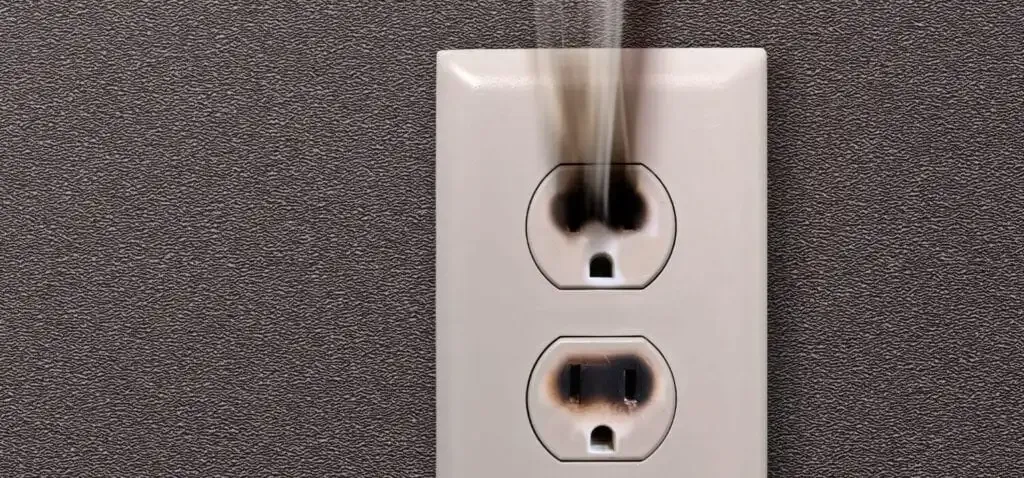
| Damaged outlet | The outlet is cracked, melted or heat damaged | Brown or black marks, warped plastic | Do not use or touch it, and call an electrician |
| Heavy load | A device draws more than the outlet can safely carry | Warm plug, smell during heavy use | Unplug if safe and reduce the load |
1. Loose Electrical Connections
A loose connection is one of the most common reasons an outlet overheats. When a wire is not held tightly to its terminal, the electricity has a smaller, poorer path to cross. That creates resistance, and resistance creates heat.
Over time, that heat can loosen the connection further, darken the plastic and damage the wire insulation. Connections can loosen from years of use, from heating and cooling cycles or from an install that was never quite tight. The damage is usually inside the box, so the outlet may look normal from the outside. Fixing it means opening the outlet, which is a job for a licensed electrician.
2. Overheating Electrical Outlets
Worn contacts that no longer grip a plug, a damaged plug that does not seat well, a heater running for hours or faulty wiring behind the outlet can all make it overheat.
There is a difference between a circuit overload and an outlet that overheats. An overload means the whole circuit is carrying too much current, and the breaker should trip. A localized hot spot at one outlet can happen with normal current, because the heat comes from resistance at a single bad connection.
That is why a breaker that has not tripped does not prove the outlet is safe.
3. Damaged or Deteriorating Electrical Wiring
Wiring can be damaged by a nail or screw, by rodents, by water or by heat from a long-term loose connection. Past DIY work can leave poor splices, and insulation on some older wire can become brittle. Older wiring is not automatically bad, though. What matters is its actual condition. A burning smell with nothing plugged in points toward the wiring or the outlet itself rather than an appliance. Please do not pull the outlet out to look behind it.
4. Faulty or Overheating Appliances
Sometimes the smell comes from what is plugged in, not the outlet. Space heaters, hair dryers, microwaves, toasters and phone chargers can all overheat. Plugs and cords can fail too, especially if they have been bent, pinched or yanked out by the cord.
Try to notice where the smell is strongest, without leaning in close or touching anything hot. If it seems to come from the appliance or its cord, stop using that appliance. A failing device can also damage the outlet it is plugged into, so the outlet should still be checked.
5. Electrical Arcing
Arcing happens when electricity jumps across a small gap, such as between a loose wire and its terminal or across a worn contact. Each arc creates intense heat in a tiny spot. Over time, that heat can char nearby plastic and insulation.
You may hear arcing as crackling, buzzing or sizzling. You may see a small spark when plugging something in. But arcing can also happen inside the box where you cannot see it. A tiny spark when a plug goes in is sometimes normal. Repeated sparks, a smell or sound with the spark, or any visible damage is not.
6. Worn or Damaged Electrical Receptacles
An outlet, also called a receptacle, wears out with use. Signs include plugs that slip out easily, cracked faces, discolored covers, warped plastic and a loose fit in the wall.
Sometimes replacing the outlet solves the problem. Other times, the outlet failed because of a loose wire, a damaged conductor or a load it was never meant to carry. A new outlet on a bad connection will fail too. The cause has to be found first.
What Does an Electrical Burning Smell Usually Smell Like?
People describe electrical odors in different ways. None of them identifies the exact problem, but they help explain what may be heating up.
Burning Plastic Smell
This is the most common description. It usually comes from overheated wire insulation, the plastic body of the outlet or the plastic housing of a plug or appliance.
Fishy Smell Near an Electrical Outlet
Some homeowners notice a fishy smell instead. Certain heat-resistant materials used in electrical parts can give off an odor described as fishy when they overheat. A fishy smell has other causes too, so it is not a reliable test, but near an outlet it deserves the same caution as a burning one.
Smoky or Acrid Electrical Smell
A sharp, smoky smell suggests something is actively burning or very hot. Do not move closer to figure out where it is coming from. Treat it as urgent.
What Should You Do if an Outlet Smells Like Burning?
Stop Using the Outlet
Turn off the device if you can do so without touching anything hot. Do not plug in a different appliance to test the outlet.
Avoid Touching Damaged or Overheated Equipment
Do not touch an outlet, plug or cord that is hot, melted, smoking or sparking. If a plug is stuck in a damaged outlet, leave it alone.
Disconnect Power Only if It Is Safe
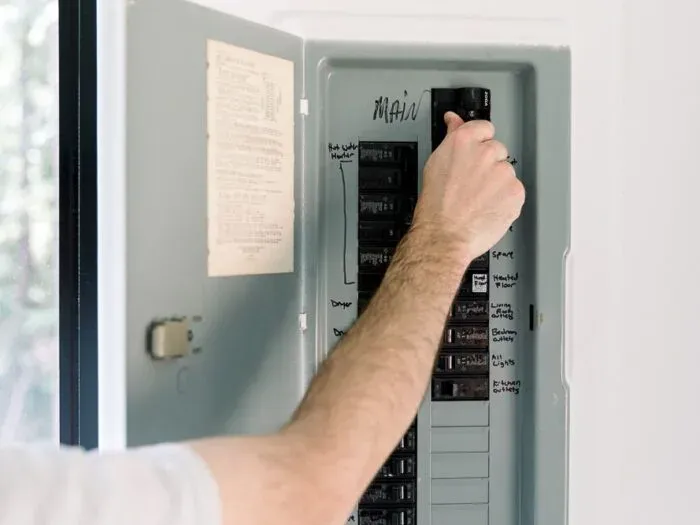
If the panel is easy to reach and shows no signs of trouble, switching off the breaker for that outlet can reduce the risk. If you are unsure which breaker it is, or if there is any smoke, heat or damage along the way, skip this step. Do not open or remove any panel cover.
Contact a Qualified Electrician
Even if everything seems fine now, the outlet should stay out of use until an electrician has found the cause.
Call 911 for Active Fire or Immediate Danger
If you see smoke, flames or active sparking, get everyone out of the home and call 911 from outside. Never throw water on an electrical fire. Do not stay behind to fight it.
Is a Burning Smell From an Outlet Dangerous?
It can be. A burning smell means something is getting hot enough to change the materials around it. That heat can damage insulation, weaken connections and, in some cases, lead to a fire.
There is no way to judge how serious it is from the smell alone. A small hot spot today can grow worse with continued use. That is why the outlet should not be used again until it has been evaluated.
Why Does My Outlet Smell Like Burning but the Breaker Hasn’t Tripped?
This surprises many homeowners. A standard circuit breaker trips when too much current flows through the circuit, such as during an overload or a short circuit. A loose connection at one outlet can get very hot while the current stays within the normal range. The breaker has nothing to react to.
AFCI breakers, short for arc fault circuit interrupter, can detect some arcing patterns and cut power. They add real protection, but they do not catch every hazardous condition.
A breaker that has not tripped is not defective, and it is not proof that the outlet is safe. If breakers on the same circuit trip often too, see what it may mean when a circuit breaker keeps tripping.
Can an Electrical Burning Smell Go Away on Its Own?
The smell often fades once the appliance is turned off or the connection cools down. That does not mean the problem is gone. The damaged connection is still there, and it will heat up again the next time current flows through it.
Keep the outlet unused until it has been checked. Do not wait to see if the smell comes back.
Does a Burning Electrical Outlet Need to Be Replaced?
It depends on the cause. An electrician may replace a damaged outlet, remake loose connections, repair heat-damaged wire, fix a circuit overload, test the appliance or check that the breaker and any AFCI or GFCI protection still work. Replacing the outlet alone does not always solve the problem. Our team handles outlet repair for homes in the area.
Are Older Electrical Outlets More Likely to Overheat?
Older outlets can be more prone to problems. Contacts wear out, connections loosen and past owners may have made changes. Older homes also tend to have fewer outlets, so each one carries more of today’s appliance load. Still, age alone does not make an outlet unsafe, and most older homes do not need full rewiring. Outlets that feel loose, look worn or run warm should be checked.
Burning Outlet Smell in White Bear Lake, MN: What Homeowners Should Know
In Minnesota, space heaters are a common reason outlets run hot. A heater draws a heavy, steady load for hours, which stresses any weak connection. Garage outlets that power block heaters and tools, and kitchen outlets used for air fryers and kettles, work hard too. If you notice a burning smell at any outlet, Chris Electric can inspect it and find the cause.
How Does an Electrician Find the Source of a Burning Outlet Smell?
An electrician starts with what you noticed, such as when the smell appeared and what was plugged in. Then they look for heat damage, identify the circuit and check the appliances involved. With power safely off, they inspect the outlet, connections and wiring, and use professional testing to confirm the cause. Some damage is visible right away, while some sits farther along the circuit.
How Can Homeowners Reduce the Risk of Electrical Outlet Overheating?
A few habits go a long way:
- Plug space heaters directly into the wall, never into a power strip or extension cord.
- Avoid running several high-wattage appliances on the same outlet.
- Replace damaged cords and plugs instead of taping them.
- Pay attention to plugs that fall out easily or feel warm.
- Follow the maker’s instructions for heaters and kitchen appliances.
- Have warning signs checked early.
These steps lower the risk, but they cannot remove it completely. For more everyday habits, see our electrical safety tips for homeowners.
When Should You Call an Electrician About a Burning Outlet?
Call an electrician promptly if you notice any burning smell from an outlet, a hot or discolored cover, crackling or buzzing, sparks, loose-fitting plugs or a cracked outlet. Repeated smells, unexpected breaker trips and moisture near an outlet also need attention. For a broader list of warning signs, see the signs of electrical problems in a house.
Keep the outlet unused until it is checked. If there is smoke, fire or active sparking, call 911 first.
Concerned About a Burning Outlet in Your White Bear Lake Home?
A burning smell near an outlet usually means something is overheating. It may be a loose connection, worn contacts, damaged wiring, arcing or a failing appliance. The smell alone cannot tell you which one.
Stop using the outlet, stay away from anything hot or damaged and keep it unused until it has been evaluated. For smoke, flames or immediate danger, call 911.
When there is no emergency, Chris Electric can inspect the outlet, find the cause and make the right repair. Homeowners in White Bear Lake can reach out to schedule an outlet inspection before using it again.
Frequently Asked Questions
Can an electrical outlet catch fire without tripping the breaker?
Yes. A loose or damaged connection can overheat at normal current levels, so a standard breaker may never trip. AFCI breakers can catch some arcing faults, but no breaker catches every overheating problem. That is why a burning smell should be checked even if the breaker has not tripped.
Why does my outlet smell like burning plastic?
A burning plastic smell usually means something plastic is overheating. It could be wire insulation, the outlet itself or a plug or cord. A loose connection, worn contacts or a failing appliance are common causes. Stop using the outlet and have it checked.
Why does my outlet smell fishy?
Some materials in electrical parts give off an odor people describe as fishy when they overheat. A fishy smell can have other sources, so it is not proof of an electrical problem. But if it seems to come from an outlet, treat it like a burning smell and stop using the outlet.
Is it safe to use an outlet after the burning smell goes away?
No. The smell usually fades once things cool down, but the cause is still there. The connection or part that overheated will heat up again the next time it is used. Keep the outlet unused until an electrician has inspected it.
Can a bad appliance make an electrical outlet smell like burning?
Yes. A failing appliance, a damaged plug or a worn cord can overheat and create the smell. A bad plug can also damage the outlet it is in. Stop using the appliance and have both the appliance and the outlet checked.
Does a burning outlet always need to be replaced?
Not always, but heat-damaged outlets usually are. The bigger question is why it overheated. A loose wire, damaged conductor or overloaded circuit must be fixed too, or a new outlet may fail the same way. An electrician can determine the full repair.