
The kitchen lights dip for a split second every time the refrigerator kicks on. In summer, the whole room flickers when the air conditioner starts. Most homeowners notice it, shrug and move on. Some start to wonder if something is wrong.
So why do my lights dim when an appliance turns on? Many appliances, especially those with motors, draw a burst of extra current as they start. That creates a brief voltage drop, and your lights dim for a moment. Small, quick dimming is common. Dimming that is severe, lasts several seconds, spreads through the house or keeps getting worse can point to wiring, connection or supply problems.
Here is how to tell the difference, and what homeowners in White Bear Lake should watch for.
Why Do Lights Dim When Appliances Turn On?
Every wire and connection between the utility and your light resists current a little. Electricians call this impedance. Normally, the voltage lost along the way is too small to notice. But when an appliance suddenly demands much more current, the loss grows for a moment, and the light gets dimmer.
Motors are the most common trigger. An electric motor draws several times its normal running current for a fraction of a second while it gets up to speed. This is called inrush or starting current. Refrigerators, freezers, air conditioners, furnace blowers and pumps all have motors. Not every appliance behaves the same way, and a brief jump in current does not mean the circuit is overloaded.
Lights also differ in how much they show it. Some bulbs barely change. Others, including some LEDs, react visibly to small voltage changes.
What Happens to Voltage When an Appliance Starts?
- The appliance switches on.
- Its current demand jumps, often briefly.
- Voltage drops a little at points along the circuit and service.
- Lights on the affected circuits dim.
- Once the appliance reaches normal operation, current settles and voltage recovers.
How much the voltage drops and for how long depends on the appliance, the circuit, the condition of the connections and the utility supply.
Is It Normal for Lights to Dim When an Appliance Turns On?
A small, quick dip when a motor starts is common and usually not a concern. The pattern matters more than the dimming itself.
| Dimming Pattern | Possible Explanation | Recommended Response |
|---|---|---|
| Brief, subtle dimming when a motor starts | Normal starting current | Usually nothing, just keep an eye on it |
| Lights stay dim for several seconds | Heavy load, weak connection or long wire run | Have it checked if it continues |
| Lights dim throughout the house | Service connection, utility supply or large loads | Call an electrician, and possibly the utility |
| One room dims repeatedly | Busy branch circuit or a loose connection | Have the circuit checked |
| Some lights brighten while others dim | Possible neutral connection problem | Get it checked promptly, call the utility too |
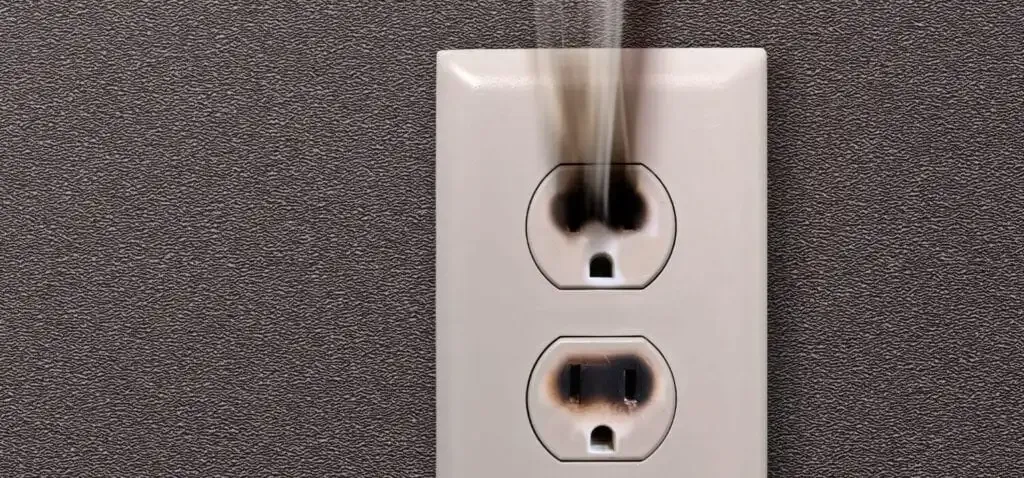
| Dimming with burning smells or buzzing | Overheating or arcing | Stop using the circuit and call an electrician |
These are possibilities, not diagnoses. The last two patterns deserve urgent attention.
7 Reasons Your Lights Dim When an Appliance Starts
1. High Starting Current From Appliances
This is the most common and usually harmless cause. A compressor or pump draws a large burst of current at startup, then settles down. You see a quick flicker that recovers right away at the same point each time. It rarely needs repair unless it grows stronger over time.
2. Excessive Electrical Demand on a Circuit
When several appliances share one branch circuit, the total load adds up. A microwave, toaster and coffee maker on the same kitchen circuit can cause steady dimming while they run.
High demand is not the same as an overload. An overload means the current is above the circuit’s rating, and the breaker should eventually trip. Dimming can happen well below that point. Spreading heavy appliances across circuits or adding a dedicated circuit may help. Never install a larger breaker to deal with it.
3. Loose or Deteriorating Electrical Connections
A loose wire at an outlet, switch, splice or panel acts like a bottleneck. It adds resistance, so voltage drops more than it should when current increases. That resistance also creates heat.
Symptoms include dimming that is stronger than expected, lights that flicker even with small loads, outlets that feel warm or work on and off, and sometimes a faint burning smell. Loose connections can become a fire hazard. Do not try to find or tighten them yourself. This needs an electrician.
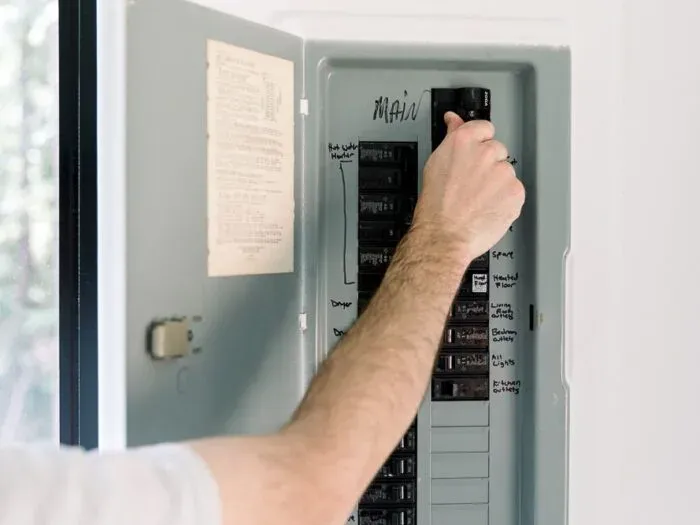
4. Electrical Panel or Service Connection Problems
If the trouble is at the panel or where power enters the home, it can affect many circuits at once. Worn or loose connections at the main breaker, on the service wires or at the meter can all cause voltage to sag under load.
A problem with the panel’s condition is different from a lack of capacity. A panel can have plenty of capacity and still have a bad connection. Not every case of dimming points to the panel, but dimming across the whole house should be checked.
5. Loose or Faulty Neutral Connections
Most homes get power on two hot wires and a shared neutral wire. The neutral carries current back and keeps the voltage on each half of the house balanced.
If the main neutral connection loosens or fails, that balance breaks down. One side of the house may get too little voltage while the other gets too much. The classic sign is lights that get brighter in some rooms while they dim in others when an appliance starts. That condition can damage electronics and appliances and should be treated as urgent. Only an electrician or the utility can confirm and fix it.
6. Utility Supply Voltage Fluctuations
Sometimes the cause is outside your home. Problems with the utility’s transformer, the service drop or the meter connection can cause voltage swings. So can heavy demand on the local grid.
Signs include whole-house dimming at odd times or the same problem at a neighbor’s home. Call your utility if you suspect their equipment. An electrician can help sort out which side of the meter the cause is on.
7. Sensitive LED Lights or Lighting Equipment
LED bulbs use a small circuit called a driver to control power. Some drivers handle voltage changes smoothly. Others, especially low-cost bulbs or bulbs paired with the wrong dimmer switch, flicker at the slightest change.
If only certain fixtures react, or the problem started after new bulbs went in, the lighting may be the main factor. Sensitive bulbs make a voltage change more visible. They do not prove the wiring is fine or faulty.
Why Do Lights Dim When Specific Appliances Turn On?
Lights Dim When the Air Conditioner Turns On
The AC compressor is one of the largest motors in a home, so a quick flicker at startup is common. If the dimming is strong, lasts more than a moment or is getting worse, both the electrical supply and the AC equipment may need a look. A failing compressor or capacitor can draw more current than normal.
Lights Dim When the Refrigerator Starts
The compressor cycles on many times a day, so the brief flicker repeats. If it gets worse, or the fridge starts running constantly, the fridge or the circuit may need attention.
Lights Dim When the Microwave Runs
A microwave is not mainly a motor load. It draws a large, steady current the whole time it runs, plus a short surge as it starts. On a shared kitchen circuit, that can dim nearby lights for as long as it runs. Microwaves often work best on a circuit sized for their load.
Lights Dim When the Washing Machine Starts
Washers have motors that start, stop and change speed during a cycle, so you may see dimming at several points. Newer machines with variable speed motors often behave differently from older ones.
Lights Dim When the Furnace or Heating Equipment Starts
A gas furnace still uses an electric blower motor, which can cause a brief dip. Heat pumps, electric furnaces and baseboard heaters draw much more power. In Minnesota winters, that equipment runs often, so the effect may be more noticeable.
Why Do Lights Dim in One Room but Not the Entire House?
When dimming stays in one area, the cause is usually on one branch circuit that is heavily loaded, has a loose connection or includes a faulty fixture. Room location does not always match circuit layout, though, so an electrician may need to trace it. Please do not open outlets or switches to look.
What if Lights Dim Throughout the Entire House?
Whole-house dimming points to something that all circuits share: the panel, the service connection, the utility supply or a very large load like central air or an electric furnace. If it is severe or getting worse, have it checked promptly. That does not automatically mean a new panel. It means the cause needs to be found.
Why Do Some Lights Get Brighter While Others Dim?
This pattern is more concerning than ordinary dimming. When one set of lights brightens as another dims, it often means the voltage between the two sides of the electrical system is out of balance. A loose or broken neutral connection is a common cause, though other service faults can do it too.
Abnormal voltage can damage TVs, computers and appliances. Do not keep running equipment to see if it happens again. Contact an electrician right away, and your utility as well.
When Are Dimming Lights a Sign of a Serious Electrical Problem?
Brief dimming at startup is rarely a problem. Severe or worsening dimming, lights that brighten as others dim, burning smells, buzzing, warm outlets, frequent breaker trips, shocks from fixtures and dimming across many circuits all suggest something more.
If there is smoke or fire, leave the home and call 911. For a broader look at warning signs, see the signs of electrical problems in a house.
What Can You Safely Check When Lights Dim?
You can learn a lot by watching. Note which appliance triggers the dimming, how long it lasts, whether one room or many are affected, and whether any lights get brighter. Pay attention to sounds or smells, but do not move close to equipment that seems hot or damaged. Think about whether it started after adding a new appliance, and whether it is happening more often.
These notes help an electrician narrow down the cause. They cannot confirm that your system is safe. Do not open the panel, test or tighten wires, change breakers or keep running equipment that causes concerning symptoms.
Do You Need an Electrical Panel Upgrade if Your Lights Dim?
Usually not. Depending on the cause, the fix might be repairing a loose connection, adding a dedicated circuit for a heavy appliance, replacing incompatible LED bulbs or dimmers, servicing a failing appliance or having the utility repair its equipment.
A panel replacement swaps out the panel. A service upgrade increases the total power coming into the home. Neither will fix a loose connection, a bad neutral or a utility problem. An electrical panel upgrade only makes sense when the home truly needs more capacity or the panel is in poor shape.
Are Dimming Lights More Common in Older Homes?
They can be. Older homes often have fewer circuits, connections that have loosened over decades, past wiring changes and panels sized for fewer appliances. Still, age alone does not mean there is a defect. How the system actually performs under load matters more than the year the home was built.
Why Lights May Dim More Often During Minnesota Winters
Cold weather does not cause voltage drops by itself, but winter brings more of the loads that do. Furnace blowers cycle all day, heat pumps and electric heat draw large amounts of power, and space heaters and garage tools add more. If breakers also start tripping, see why a circuit breaker keeps tripping.
Dimming Lights in White Bear Lake, MN: What Homeowners Should Know
Around White Bear Lake, common triggers include air conditioners in summer, furnace or heat pump equipment in winter and busy kitchen circuits. Remodels and new appliances can add load to circuits that used to be fine. Chris Electric can find out whether the cause is an appliance, a circuit, a connection or the service, and explain the options.
How Does an Electrician Diagnose Lights Dimming When Appliances Start?
An electrician starts with your observations, then identifies the circuits involved, considers the appliance loads and checks for voltage problems. They inspect connections where it makes sense and work out whether the cause is inside the home or on the utility side. A single voltage reading rarely tells the whole story.
When Should You Call an Electrician About Dimming Lights?
Call an electrician if dimming is persistent, worsening or whole-house, or if lights get unusually bright. If the whole house is affected or lights brighten and dim, contact your utility too. For smoke, fire or immediate danger, call 911 first.
Lights Dimming When Appliances Start in White Bear Lake? Get Professional Help
A brief dip when an appliance starts is common, especially with motors. But dimming that is strong, lasts, spreads through the house or comes with brightening lights deserves attention. The cause could be appliance demand, a busy circuit, a loose connection, a neutral problem, sensitive bulbs or the utility supply, and the fix depends on finding which. If the dimming in your home seems unusual, Chris Electric can help. White Bear Lake homeowners can reach out to schedule electrical troubleshooting or an inspection.
Frequently Asked Questions
Is it normal for lights to dim when an air conditioner starts?
A quick dip when the AC compressor starts is common, since it draws a burst of current. It should recover right away. If the dimming is strong, lasts more than a second or two, or is getting worse, have the electrical supply and the AC equipment checked.
Why do my lights dim when the microwave turns on?
A microwave draws a large, steady current while it runs. If it shares a circuit with lights or other appliances, the voltage on that circuit can drop for as long as it runs. A loose connection on that circuit can make the effect stronger.
Can overloaded circuits cause lights to dim?
Heavy loads on a circuit can cause dimming, even before the circuit is technically overloaded. A true overload will usually trip the breaker over time. If dimming happens often on one circuit, spreading out the load or adding a dedicated circuit may help.
Can loose wiring cause lights to flicker or dim?
Yes. A loose connection adds resistance, so voltage drops more when current rises. That can cause dimming or flickering, and it also creates heat. Loose connections can be a fire risk and should be repaired by an electrician.
Why do lights dim throughout my whole house?
Whole-house dimming usually points to something all circuits share, such as the service connection, the panel, the utility supply or a very large load like central air. If it is strong or getting worse, have an electrician check it and contact your utility.
Will upgrading my electrical panel stop my lights from dimming?
Not necessarily. A panel upgrade helps only if the panel is in poor condition or the home needs more capacity. It will not fix a loose connection, a neutral problem, sensitive bulbs or a utility issue. The cause needs to be diagnosed first.